

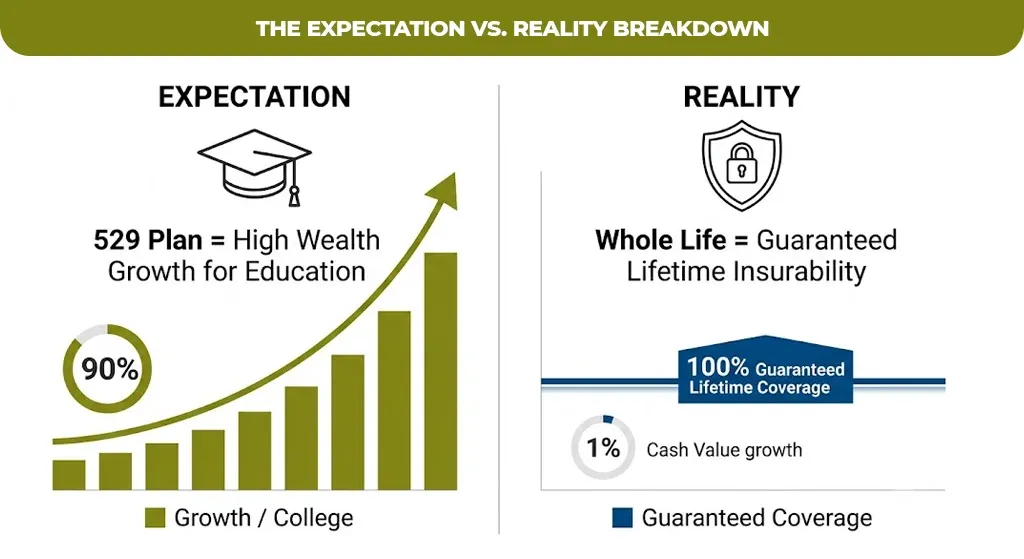
My grandmother in Arizona just bought her grandson $50,000 whole life insurance policy at birth, and she is expecting it to find his college years later. By the time he turned it in, the cash will be covered about one semester’s textbook, not the tuition fee.
That’s not a scam. It’s how whole life insurance is built, and nobody explained the actual math before she signed. The policy is doing exactly what it’s designed to do, just not what she thought she was buying.
Whole life insurance for kids is a real, useful tool for a specific goal: locking in low-cost coverage and guaranteed future insurability. It is a weak tool for college savings or fast wealth building, and confusing the two is the mistake that costs families the most.
Is Whole Life Insurance for Kids Worth It?
For most families, yes, if the goal is locking in permanent coverage and guaranteed insurability while a child is young and healthy. No, if the goal is maximizing investment growth or saving for college.
The policy is a death benefit of the child dies, which is rare but devastating. It also builds slow, guaranteed casual in the background. The rates never increased in the coverage is never expires as long as you are paying your premiums on time
If you want growth-focused savings for education, a 529 plan or custodial account will almost always outperform a whole life policy’s cash value. If you want lifelong coverage locked in at the lowest possible rate, whole life insurance for kids does that better than almost anything else available.
How Much Does Whole Life Insurance for Kids Cost in 2026?
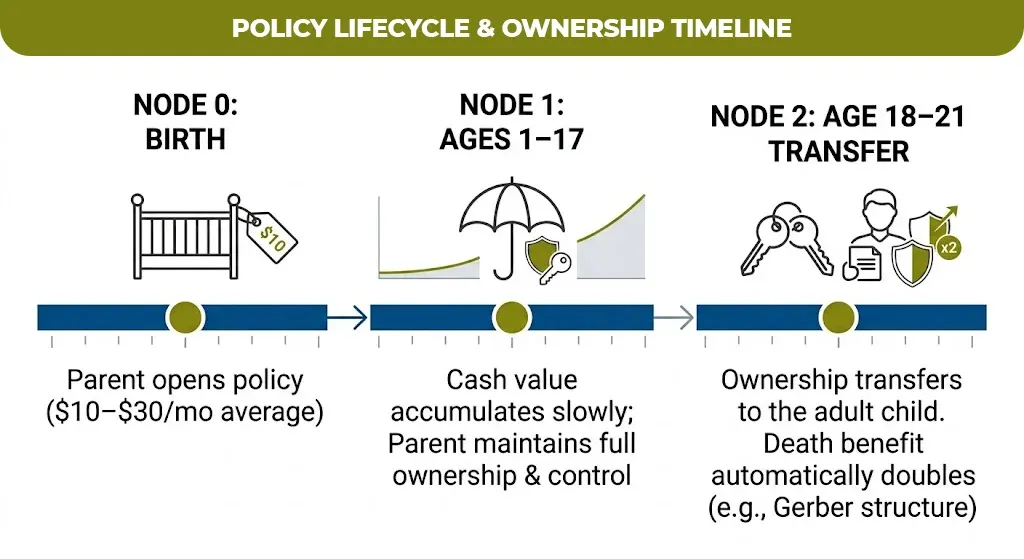
Expect to pay $10 to $30 a month for $10,000 to $25,000 in coverage on a young child, with rates as low as $3.70 a month for smaller amounts on infants. According to 2026 rate analysis from MoneyGeek, a $50,000 policy on a newborn averages around $27 a month, and pricing climbs gradually as the child gets older at the time of purchase.
Adding a child rider to a parent’s existing policy is usually the cheapest route into coverage. Insurance By Heroes’ 2026 pricing data shows a $10,000 to $25,000 standalone children’s policy typically runs between $50 and $150 a year, well under $15 a month.
Whole Life vs. Term Rider vs. Custodial Savings Account
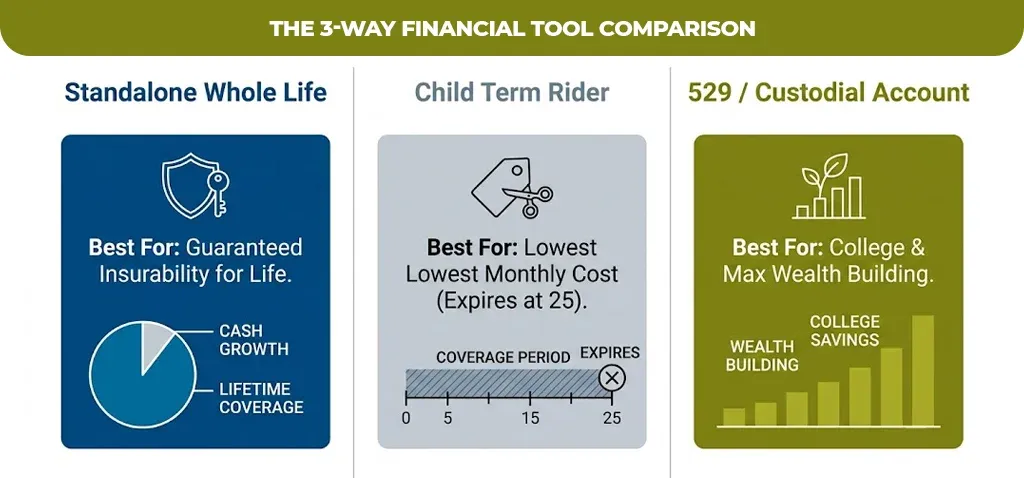
Whole life wins on permanence and guaranteed insurability. A term rider wins on price. A custodial savings account or 529 plan wins on growth potential.
According to 2026 carrier comparisons from CNBC Select a children’s term rider added to a parent’s policy typically costs less than a standalone whole life plan and can offer up to $20,000 to $25,000 in coverage. The tradeoff is that term coverage usually ends around age 25 and builds no cash value at all.
What Does “Guaranteed Insurability” Actually Mean?
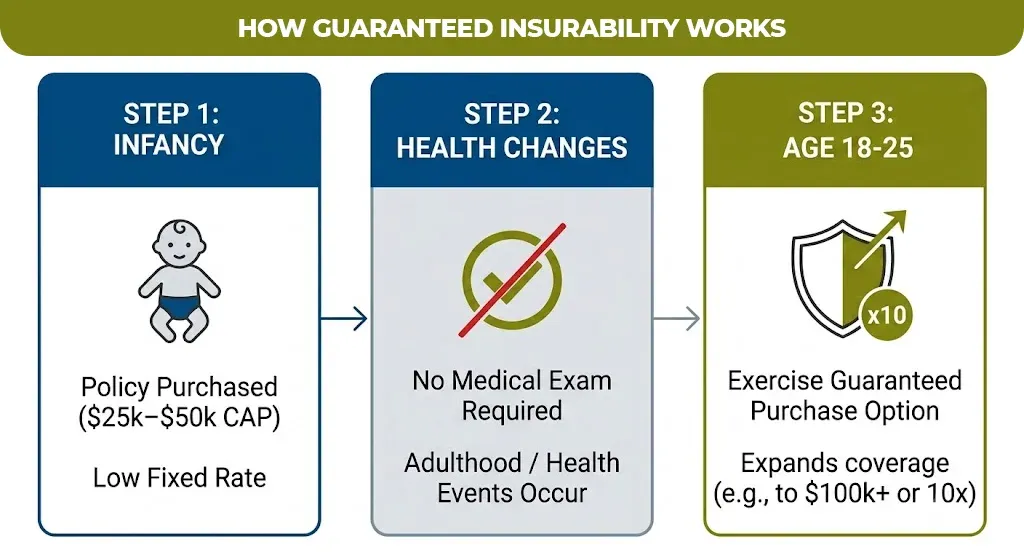
It means your child can buy more life insurance as an adult without answering health questions or taking a medical exam, even if they develop a serious condition later. This is the single biggest reason financially literate parents buy this coverage at all.
Most policies attach this through a guaranteed purchase option rider, letting the policy grow at specific milestones. Gerber Life’s 2026 policy terms show a child can typically buy up to 10 times the original coverage amount, often up to $100,000, at set ages or life events like marriage or childbirth, without new underwriting.
Coverage limits on juvenile policies are capped for a reason. The insurance company generally hold children’s policies between $25,000-$50,000 in face value. And this is specifically to prevent a policy amount large enough to create a financial motive around the child’s death.
Who Owns the Policy, and What Happens at 18?
The parent or the legal guardian are the ones who owns the policy and controls the premiums, cash value and beneficial decisions under the child becomes an adult. The ownership generally transferred between the ages 18 and 21 depending on the insurance company and the state rules.
Once ownership transfers, the now-adult child can keep the policy, exercise any guaranteed purchase riders, or in some cases convert it into a larger adult policy. Some plans, like Gerber Life’s structure, automatically double the original death benefit at age 18 with no new health questions asked.
Parents do not have to transfer the ownership immediately at 18 in every state, for that to check your policies specific victims. Reviewing this clause before buying a voice the surprise is about who is actually in control of the policy during the teenage years.
Common Mistakes Parents Make
- Treating it as a college fund. Cash value grows slowly by design; a 529 plan or index fund will almost always beat it for education savings.
- Buying too much coverage. Most insurers cap juvenile policies at $25,000 to $50,000 for a reason; oversized policies raise both cost and unnecessary red flags.
- Skipping the guaranteed purchase rider. This rider is often the entire point of buying whole life insurance for kids; leaving it off removes the main long-term benefit.
- Not comparing to a term rider first. If budget is tight, a cheaper term rider on a parent’s policy may cover the immediate need without locking in decades of premiums.
A Simple Next Step
If you’re weighing whole life insurance for your kids against a 529 plan or a cheaper term rider, that comparison is worth five honest minutes before you commit to decades of premiums. At Mlife insurance, we’ll walk through your specific goal, whether that’s insurability, savings, or both, and show you the real numbers side by side, no pressure either way.

Joyce Espinoza, Expert Life Insurance Agent
Joyce Espinoza is a trusted life insurance agent at mLifeInsurance.com. She’s been in the insurance industry for over ten years, helping people, especially those with special health conditions to find the right coverage. At MLife Insurance, Joyce writes easy-to-understand articles that help readers make smart choices about life insurance. Previously, she worked directly with clients at Mlife Insurance, advising nearly 3,000 of them on life insurance options.