
Key Points
- Direct burial is a simple funeral option without viewing or ceremony
- It is one of the most affordable funeral service options
- No embalming is required in most cases
- Burial happens shortly after death (usually 24–72 hours)
- Families can hold a memorial service later
- Costs are much lower than traditional funerals
- Legal paperwork and permits are still required
When a loved one passes away, planning a funeral can be very difficult, stressful and also very expensive. But there is a simpler, more affordable option that is called direct burial. This plan is not like the traditional funerals that come with viewing, ceremony and embalming, the direct burial focuses on what really matters, that is laying your loved one to rest with dignity. This is a quick and straightforward method that can save the families thousands of dollars. In this guide we will explain about the direct burial, how this process works, what are the costs, How is it different from traditional burial?, what are the legal steps and also give you the alternative options so you can make the best decision.
Direct Burial Explained: Meaning, Process & Purpose
Direct burial that is also called immediate barrier is one of the simplest and most affordable human service options that is available today. This involves burying the deceased shortly after the death without any formal viewing, visitation or funeral ceremony.
According to the funeral consumer alliance, direct burial is defined as the disposition of human remains by burial, without formal viewing, visitation or ceremony.
In simple words direct burial only focuses on the important process of the body to rest without any extra services that increase the prices.
Direct Burial vs Traditional Burial: What’s the Real Difference?
Understanding the differences between direct burial and traditional burial will help the families to make the better decision. Let’s get the more understanding by this quick table
| Direct Burial | Traditional Burial |
| No viewing or visitation | Includes viewing and visitation |
| No embalming required | Embalming is often required |
| No formal funeral ceremony | Formal funeral service with guests |
| Simple casket or container | Expensive casket and arrangements |
| Quick burial process | Takes several days to plan |
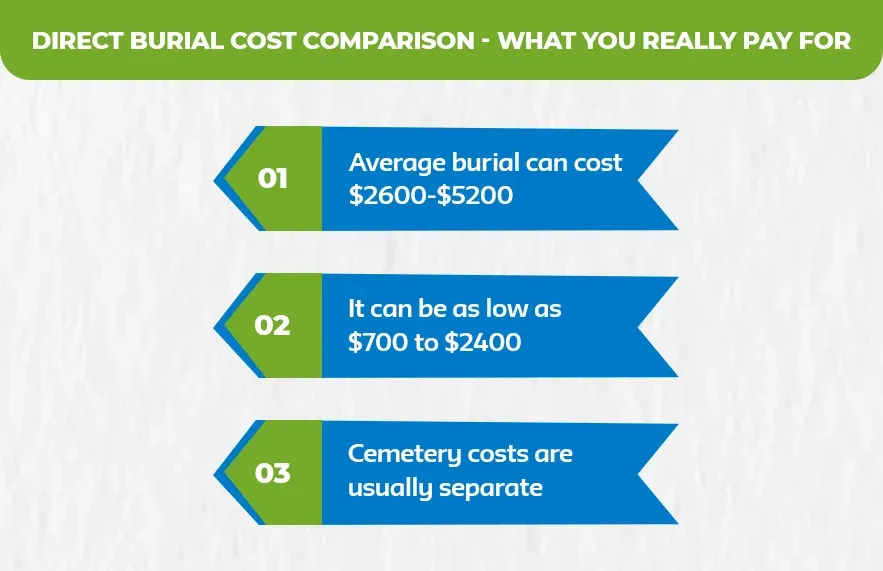
Direct Burial Cost Comparison – What You Really Pay For
One of the biggest reasons people choose direct burial is its affordability.
The direct burial costs
- Average burial can cost $2600-$5200
- It can be as low as $700 to $2400
- Cemetery costs are usually separate
The traditional funeral can cost $6000-$15,000+
Direct burial is cheaper because there is no involvement, no viewing services, no expensive ceremony, simple casket or container and less staff and facility use. Because of all these reduced services that direct burial is considered one of the most budget friendly funeral service options that are available today.
Legal Rules for Direct Burial: What You Must Know First
Even though direct burial is very simple, there are still legal steps that must be followed.
According to the funeral consumer alliance, direct periods include transportation of the body to the funeral home, filing the certificate, getting necessary permits and coordinating with the Cemetery.
Important legal points can include a certificate that is required, burial permits that must be approved, loss by country or state and involvement is usually not required by law. This means families still need professional help even for the simple.
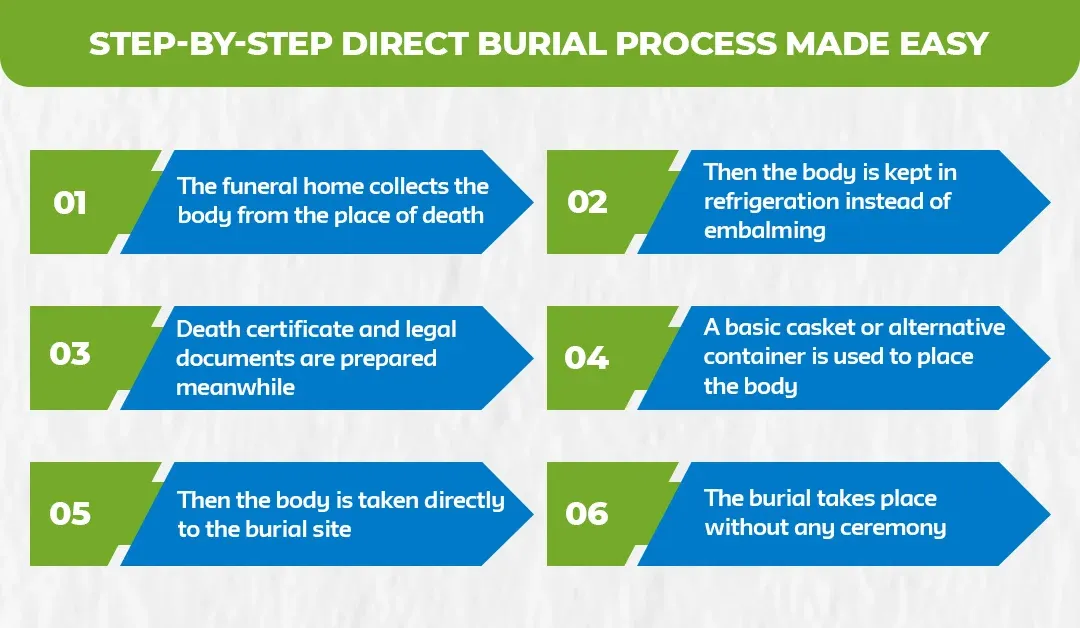
Step-by-Step Direct Burial Process Made Easy
The preparation process of direct burial is very simple and quick as compared to the traditional funerals.
- The funeral home collects the body from the place of death
- Then the body is kept in refrigeration instead of embalming
- Death certificate and legal documents are prepared meanwhile
- A basic casket or alternative container is used to place the body
- Then the body is taken directly to the burial site
- The burial takes place without any ceremony.
Eco-Friendly Burial: Is Direct Burial a Green Choice?
burials can also be a more environmentally friendly choice as compared to the traditional burial.
It is eco-friendly because there are no embalming chemicals, less use of metal or heavy materials, simple or biodegradable caskets can be used and the lower carbon footprint due to the fewer services.
Some families combined direct with green burial practices where the body is buried naturally using the biodegradable materials.
Benefits of Direct Burial: Simple, Affordable, Practical
The direct burial includes so many benefits like it is very affordable, the process is very simple and quick, there is flexible memorial options later and the the process is eco-friendly
How Much Does Life Isurance Cost?
Downsides of Direct Burial: What to Consider First
The downsides include no formal goodbye ceremony, limited time for family gathering and it also feels too simple for some families.
Final Thoughts: Is Direct Burial the Right Decision for Your Family?
Direct burial is a practical, respectful and also affordable alternative with the traditional funerals. This method focuses on the essential process of burial while removing the costly extras like embalming, viewing and ceremony. As explained, this is a very minimal service option that is designed to reduce expenses while still meeting the legal and barrier requirements. Today there are so many families who are choosing direct burial because it offers financial relief, simplicity and also flexibility. If you are looking for some simple, cost-effective and respectful funeral service options then that direct burial can be a meaningful choice for your family.
Let’s protect your loved ones from stress and unexpected causes. M-Life Insurance helps you to plan an affordable funeral and burial options with ease. Get your free quote today and secure peace of mind.

Joyce Espinoza, Expert Life Insurance Agent
Joyce Espinoza is a trusted life insurance agent at mLifeInsurance.com. She’s been in the insurance industry for over ten years, helping people, especially those with special health conditions to find the right coverage. At MLife Insurance, Joyce writes easy-to-understand articles that help readers make smart choices about life insurance. Previously, she worked directly with clients at Mlife Insurance, advising nearly 3,000 of them on life insurance options.