


An agent shows you a polished illustration of a policy that can build cash and covers you for whole life. You sign because it sounds like a smart investment. Ten years later, the premiums have climbed, the cash value is far below the projection, and you are choosing between paying more or losing the coverage.
This is the most common regret in the universal life insurance vs term decision. The right option totally depends on how long you need protection, how much you can pay and if you want an insurance product to double as a saving tool. This guide will give you numbers and a simple way to decide.
Term vs Universal Life Insurance: Which Is Better?
For most of the families, term life insurance is the better option because it delivers the largest death benefit for the lowest cost during the years When you need most. Universal life insurance makes sense only when you need permanent coverage, if you have maxed out other saving options or have any need of estate planning.
Term life insurance cover you for a set time and it can be 10, 20 or 30 years. If you die during that time then your beneficiaries will receive the death benefit. If you outlive the plan then the policy ends and pay nothing.
Universal life insurance is a type of permanent life insurance plan. It can stay Active for your whole life as long as you are paying the policy premiums. It also built cash value that you can adjust your premiums and death benefit within the limits.
Here is the honest trade-off. Term gives you more coverage per dollar. Universal life insurance give you lifelong coverage and saving components but at much higher price as compared to the other plans with more complexity.
Industry groups such as LIMRA have repeatedly found that large numbers of American households feel they do not have enough life insurance. For most of those households, affordability is the barrier, and term is the product that removes it.
Term Life Insurance vs Universal Life: Cost Comparison
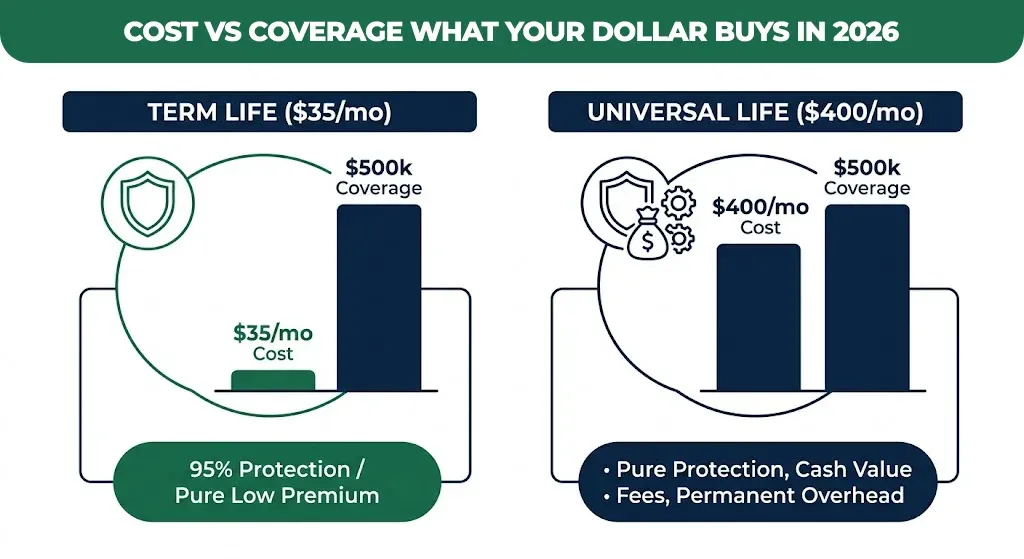
Universal life typically costs five to ten times more than term for the same death benefit. The gap exists because universal life covers you for life and funds a cash value account, while term only covers a limited window.
The table is showing the illustrative monthly premiums for a healthy, non smoking 35 years old person who is buying $500,000 of coverage.
| Policy Type | Coverage Length | Estimated Monthly Premium | Builds Cash Value? |
| 20-year term | 20 years | $30 to $40 | No |
| 30-year term | 30 years | $45 to $60 | No |
| Guaranteed universal life | To age 90 to 121 | $250 to $350 | Minimal |
| Indexed universal life | Lifetime | $350 to $550 | Yes |
| Whole life | Lifetime | $450 to $600 | Yes |
Term vs Whole Life vs Universal Life Insurance
Whole life insurance has fixed premiums and it gives you guaranteed growth. Whole life insurance offer flexible premiums with the variable growth and term has the lowest premiums with no growth at all. Make sure to pick the one based on how much certainty and flexibility you want.
| Feature | Term | Whole Life | Universal Life |
| Policy duration | Fixed period | Lifetime | Lifetime, if funded |
| Premiums | Level during term | Fixed | Flexible |
| Cash value accumulation | None | Guaranteed, slower | Depends on policy type |
| Death benefit | Fixed | Fixed | Adjustable |
| Best for | Income protection | Predictability | Flexibility and estate needs |
Indexed, Variable, Guaranteed, and Group Universal Life vs Term
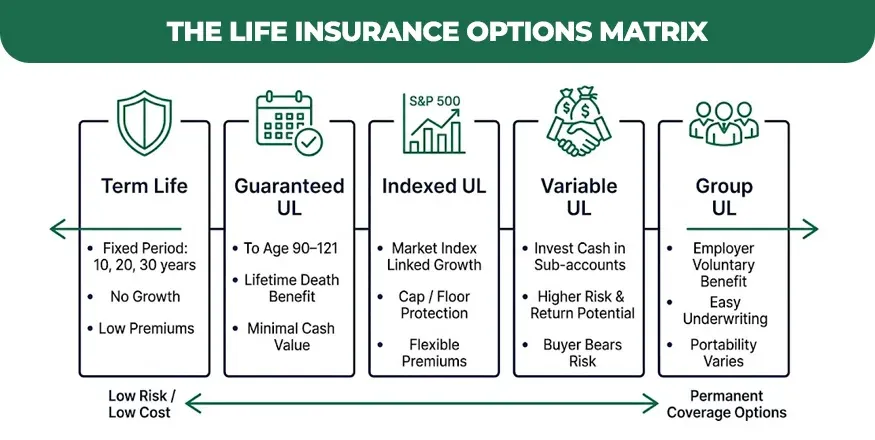
Universal life insurance comes in several versions and each one carries a different risk. Guaranteed plan is the safest option, index is part rate and variable is the riskiest option.
Guaranteed universal life vs term life insurance
Guaranteed universal life focuses on a lifetime death benefit with little cash value. It is the cheapest form of permanent coverage. It suits to someone who wants coverage at the age 90 or beyond without paying whole life prices.
Indexed universal life vs term
Index universal life insurance link the cash value growth to the market index such as S&P 500 With the cap on gains and the floor that is often 0% That protect against the losses. The cap can change over time and also reduce your returns. So make sure to ask a conservative scenario.
Variable universal life insurance vs term
Variable universal life lets you invest the cash value in sub-accounts similar to mutual funds. Gains can be higher, but you can also lose money. FINRA explains that these policies are regulated as securities and carry investment risk that the buyer bears.
Group universal life insurance vs term
Employers often offer group universal life as a voluntary benefit. It is convenient and requires little underwriting, but rates can be higher than individual term for a healthy person, and portability varies. Compare it against an individual term quote before enrolling.
How to Choose: A 4-Question Test
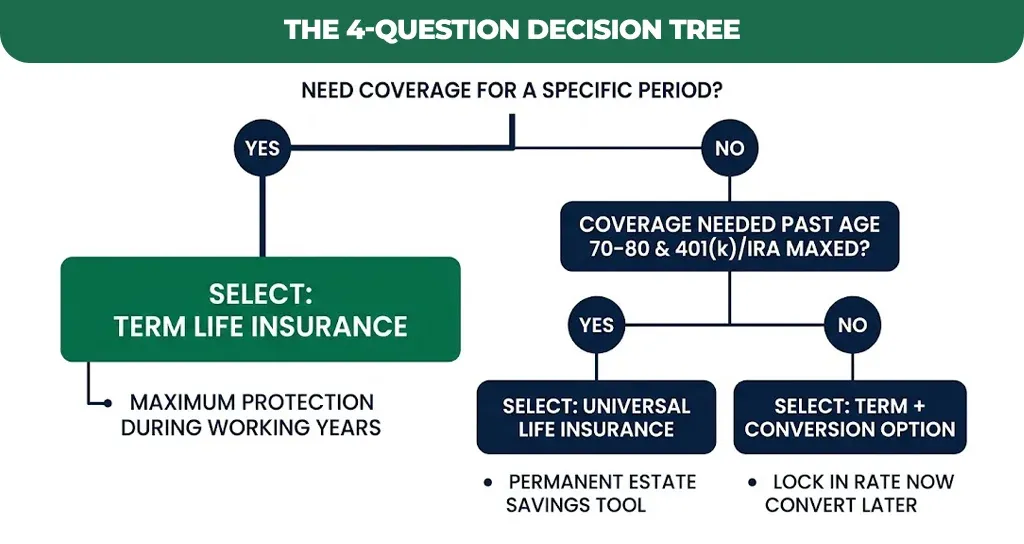
If you need the coverage for a specific time such as until the kids are grown or mortgage is paid, make sure to choose the term of life insurance. If you need coverage that will last your entire life then consider universal life insurance.
- Ask yourself these four questions:
- How long will people depend on your income
- Will I need coverage after age 70 or 80?
- Have I already maxed out my 401K and IRA?
- Can I commit to the premiums for decades?
A useful middle path exists. Many term policies include a conversion option that lets you switch to permanent coverage later without a new medical exam. Check this feature before you buy, since it gives you flexibility without the upfront cost.
Final Verdict on Universal Life Insurance vs Term
For protecting your income during your working years, term life insurance is usually the more affordable and efficient option for you. For lifelong coverage, state planning situation with the flexible premiums matter than the universal life can earns it’s higher price.
The best policy is the one that you can afford to keep, that matches how long your family needs protection. If you are unsure make sure to start with the term and conversion options, then revisit your needs after every few years.
Want a Second Set of Eyes on Your Quote?
Policy details can look similar on the paper and behave very differently over time. If you already have a quote or illustration and want to help comparing it to the other options then the team at Mlife Insurance can walk you through the numbers with you.

Joyce Espinoza, Expert Life Insurance Agent
Joyce Espinoza is a trusted life insurance agent at mLifeInsurance.com. She’s been in the insurance industry for over ten years, helping people, especially those with special health conditions to find the right coverage. At MLife Insurance, Joyce writes easy-to-understand articles that help readers make smart choices about life insurance. Previously, she worked directly with clients at Mlife Insurance, advising nearly 3,000 of them on life insurance options.