


Buying a wrong life insurance policy from a well-known name is a very easy mistake. A recognizable brand does not automatically mean that it’s the right product for your age, your health or your budget.
Mutual of Omaha is a real, and it is financially strong company but it lineup ranges from simple guaranteed issue barrier policies to complex index universal life insurance plan. And picking the wrong one can mean that you are overpaying for the coverage that you do not need or getting less protection than you think. This review breakdown what Mutual of Omaha life insurance actually cover, what it cost in 2026 and where the buyers get ripped off.
What Is Mutual of Omaha Life Insurance?
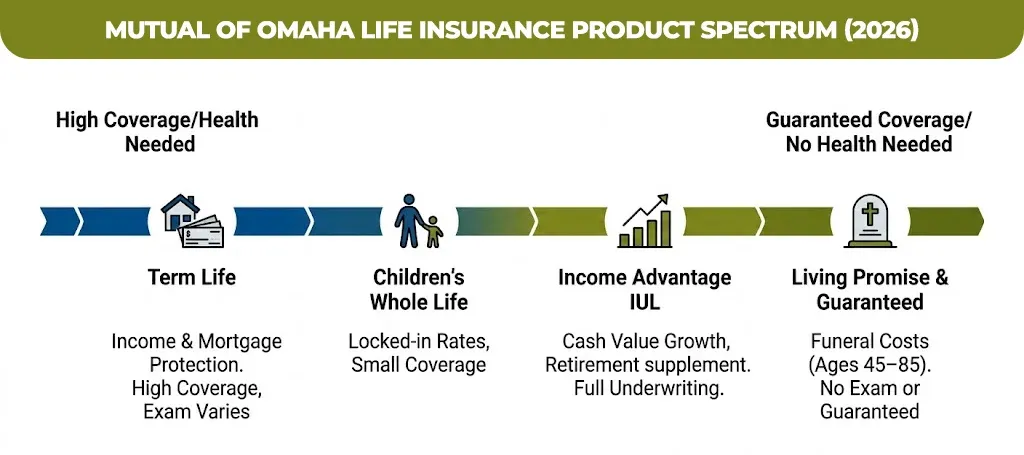
Mutual of Omaha life insurance is a range of term life insurance, whole life, universal life and guaranteed issue life insurance policies that I sold by Mutual of Omaha and it’s subsidiary. The lineup includes term life express, living promise is final expense whole life insurance, whole life guaranteed insurance and income advantage IUL. Plus children’s whole life insurance and accidental death coverage.
The company holds an A+ Superior rating from AM Best, an A+ from S&P Global Ratings, and an A1 from Moody’s, reflecting strong claims-paying ability according to Reviews.com’s 2026 breakdown. It also ranked first out of 22 carriers in J.D. Power’s 2025 U.S. Individual Life Insurance Study for customer satisfaction.
Is Mutual of Omaha Life Insurance Good in 2026?
Yes, most of the buyers are particularly seniors and those who cannot pass for medical underwriting. It’s financial strength rating sit at the upper end of the in industry and it is an NAIC complaint index that is one around 0.51. It means that it draws roughly half of the complaints regulators would expect for a company it’s size, that is based on MoneyGeek’s 2026 analysis.
That said, the fit depends heavily on what you’re buying. A healthy 35-year-old shopping for a large term policy online in ten minutes is not the ideal customer here, since term and universal life applications still require speaking with a licensed agent rather than an instant online quote.
Seniors seeking guaranteed acceptance whole life or final expense coverage are a much stronger match, since that’s the segment where Mutual of Omaha specializes and where its underwriting flexibility stands out.
Mutual of Omaha Life Insurance Products Compared
| Product | Coverage Amount | Medical Exam | Best For |
| Term Life Express | $100,000–$10,000,000 | Health questions, no exam for some ages | Income replacement, mortgage protection |
| Living Promise (final expense whole life) | $2,000–$40,000 | No exam, 5–7 health questions | Funeral and burial costs, seniors 45–85 |
| Whole Life Guaranteed | $2,000–$25,000 | None — guaranteed acceptance | Applicants with serious health conditions |
| Income Advantage IUL | Custom, based on need | Full underwriting | Cash value growth, retirement supplementation |
| Children’s Whole Life | Varies by state | Three health questions | Locking in coverage for kids at low rates |
Term coverage is the cheapest way to get a large death benefit but builds no cash value and ends when the term expires. Whole life and guaranteed-issue policies cost more per dollar of coverage but last for life and build cash value on a tax-deferred basis, according to MoneyGeek’s product analysis.
Mutual of Omaha Final Expense Insurance for Seniors: How It Actually Works
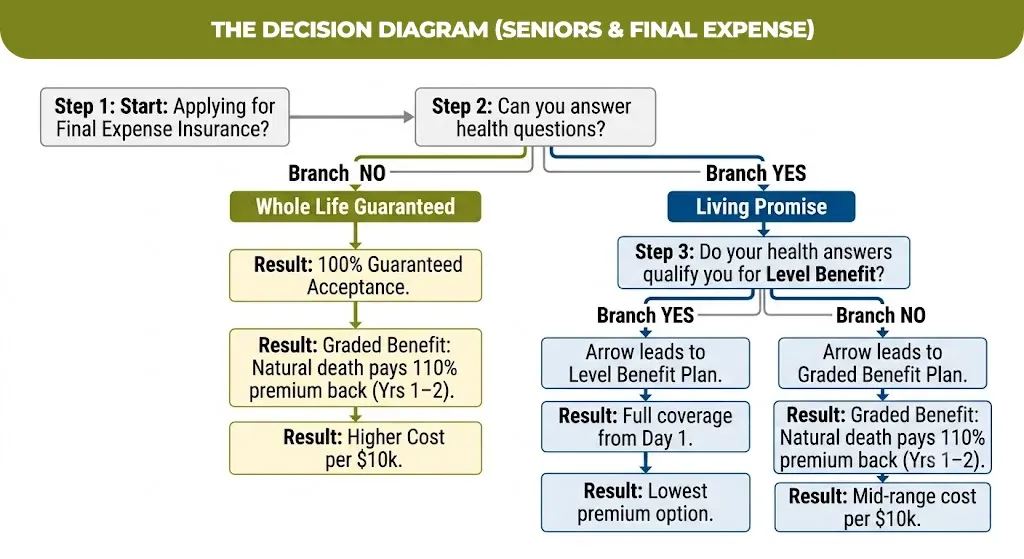
Living Promise is the company’s flagship final expense whole life insurance product, built specifically to cover funeral costs, medical bills, and small debts for people ages 45 to 85. It comes in two tiers, Level and Graded, and which one you qualify for depends on your answers to health questions over the phone, not a medical exam.
The Level Benefit plan pays the full death benefit from day one if approved. The Graded Benefit plan is for applicants with more significant health issues, and if death occurs within the first two years from natural causes, it returns 110% of premiums paid rather than the full face amount, based on details from ChoiceMutual’s 2026 final expense review.
For applicants who don’t qualify for Living Promise at all, Mutual of Omaha’s guaranteed-issue Whole Life Guaranteed policy accepts anyone ages 45 to 85 regardless of health history, with no health questions asked. Coverage tops out around $25,000, and it also carries a graded death benefit for the first two years.
Understanding With The Help Of Example
A 68-year-old with well-controlled diabetes wants $15,000 in coverage to cover funeral costs and leave a small cushion for her spouse. She has two realistic options within the same company: Living Promise, if her health questions clear her for the Level plan, or Whole Life Guaranteed, if they don’t.
If she qualifies for Living Promise Level, her policy pays the full $15,000 from day one and her monthly premium runs lower than the guaranteed-issue alternative. If her diabetes complications disqualify her from Level or Graded Living Promise, Whole Life Guaranteed still accepts her automatically, but she pays more per dollar of coverage and faces the two-year graded benefit period.
This is exactly why comparing quotes across both product types, rather than assuming guaranteed-issue is always necessary, can save a meaningful amount over the life of the policy.
Mutual of Omaha Life Insurance Cost in 2026
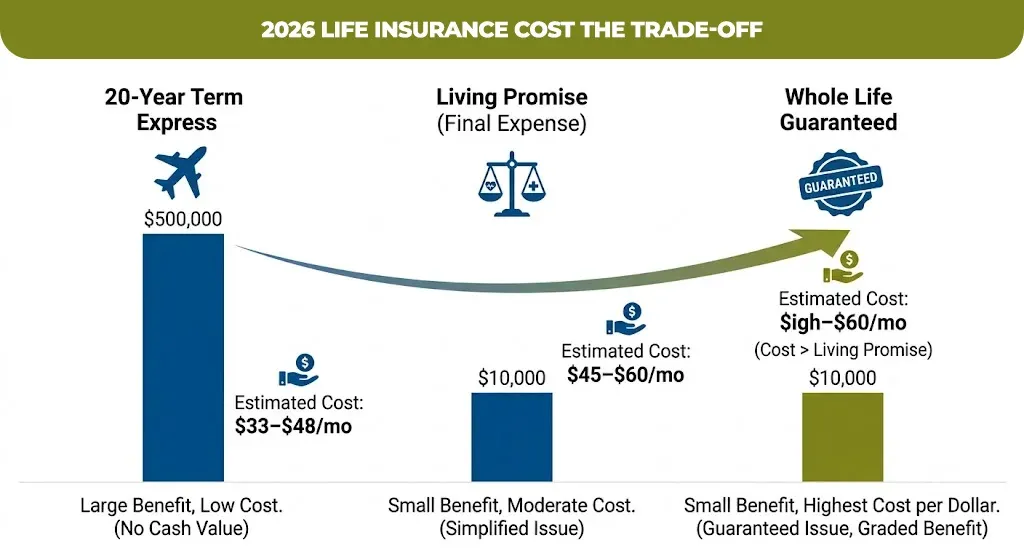
Rates vary widely by product, age, and health class. A healthy 40-year-old can expect to pay roughly $33 to $48 a month for a $500,000, 20-year Term Life Express policy, while a 65-year-old buying $10,000 of Living Promise final expense coverage typically pays around $45 to $60 a month, according to Mozdex’s 2026 rate breakdown.
Mutual of Omaha’s average annual premium across its book of business runs around $353, slightly below the national average of $382, ans it is based on Insure.com’s 2026 ratings data. Guaranteed-issue policies cost more per dollar of coverage than simplified-issue or fully underwritten policies, since the insurer takes on more risk by skipping health questions entirely.
Mutual of Omaha vs. Other Top Life Insurance Carriers
| Carrier | AM Best Rating | Online Term Quotes | Best Known For |
| Mutual of Omaha | A+ | No, requires an agent | Final expense, guaranteed issue, seniors |
| Ladder | A+ | Yes, fully digital | Fast term coverage for healthy applicants |
| Gerber Life | A+ | Partial | Children’s whole life, small guaranteed issue |
| Protective | A+ | Partial | Larger whole life and IUL cash accumulation |
| USAA | A++ | Partial (members only) | Military families, whole life bundling |
Mutual of Omaha wins on senior-focused products and customer service reputation but loses ground on convenience for younger, healthy buyers who want to complete a term policy entirely online. Shoppers who want the lowest possible premium as their top priority should get competing quotes rather than assuming brand recognition equals the best rate.
What to Watch Out For Before You Apply
There’s a real gap between regulator-reported satisfaction and public review sites. The NAIC complaint index sits near 0.5, well below the industry baseline, yet Trustpilot scores for the company sit closer to 1.4 to 1.7 out of 5, a pattern common among insurers where dissatisfied claimants are far more likely to leave a public review than satisfied ones.
No online quotes exist for term or universal life insurance. If you want to compare a term policy price instantly without a phone call, that’s a real limitation worth knowing before you start the process, based on NerdWallet’s 2026 review.
Graded death benefits catch people off guard. Applicants who assume any Mutual of Omaha whole life policy pays in full immediately are sometimes surprised to learn their specific plan has a two-year waiting period for natural death, so confirm which tier you’re approved for before relying on the coverage.
Healthy applicants under 75 shopping for term or universal life can qualify for premium credits through Mutual of Omaha’s FIT Credit Program, which rewards habits like routine checkups and staying tobacco-free for a decade, according to NerdWallet’s coverage of the program. It’s worth asking your agent about this directly, since it isn’t always highlighted upfront during the quote process.

Compare Life Insurance Plans With Confidence
Choosing the right life insurance policy doesn’t have to be complicated. Our licensed experts compare top-rated insurers, explain your options in simple terms, and help you find affordable coverage that fits your budget, health, and long-term goals. Get a free personalized quote today and protect the people who matter most.

Joyce Espinoza, Expert Life Insurance Agent
Joyce Espinoza is a trusted life insurance agent at mLifeInsurance.com. She’s been in the insurance industry for over ten years, helping people, especially those with special health conditions to find the right coverage. At MLife Insurance, Joyce writes easy-to-understand articles that help readers make smart choices about life insurance. Previously, she worked directly with clients at Mlife Insurance, advising nearly 3,000 of them on life insurance options.