


Key Takeaways
- Low cost coverage
- Smaller benefit amounts
- Shorter policy terms
- Lifetime protection options
- Medical exam options
- Designed for seniors
Choosing the right life insurance product is very important for protecting your family financial future. But there are so many choices for seniors, parents and budget conscious individuals but the most common ones are final expense insurance and term life insurance. While both insurance plans offer you financial security, they serve very different purposes. Understanding the difference between final expense and term life insurance can help you a lot to avoid overpaying or choosing a plan that does not match your goals.
In this detailed comparison guide, we will write down the final expense vs term life insurance. We also provide you with the easy two tables about the comparison and explain how policy works so you can make a better and confident decision.
Understanding Of Final Expense Insurance
Final expense insurance that is sometimes also called insurance or funeral insurance. It is a type of whole life insurance that is specially designed to cover the end of life expenses.
This insurance plan usually include
- Funeral and Burial expenses
- Medical bills
- Outstanding small debts
- Cremation Costs
- End of life arrangements
Since the average funeral can cost $8000 to $15000. Final expense insurance gives families the funds they need without financial stress.
Key Features Of Final Expense Insurance
- Designed specially for seniors
- Small coverage amount
- No medical exam
- Premiums never increases
- Lifetime coverage as long as premiums are paid
Basics Of Term Life Insurance
Term life insurance provides coverage for a specific time that is all the term. That time can be done, 20, 25 or 30 years. If the insured person passes away within that term, then the beneficiaries will receive the full death benefit.
Key features of term life insurance
- Higher coverage amount that is $100,000-$1 million +
- Lower initial premiums
- Coverage ends when the term expires
- This is best for the income replacement
- Best for the parents, young adults and homeowners
You just have to remember that term life insurance is not a permanent life insurance policy. Once the term ends then the policy will expire unless you renew this plan or convert it.
| Features | Final Expense Insurance | Term Life Insurance |
| Purpose | funeral and end of life costs | income replacement and debt protection |
| Coverage Amount | $5000-$30,000 | $1000-$1M+ |
| Medical Exam | No Exam Required | Medical Exam usually required |
| Cost | Higher Per $1000 coverage | lower per $1000 coverage |
| Length For Coverage | Lifetime | 10,20 and 30 years |
| Ideal For | seniors, fixed income buyers | families, young adults, home owners |
| Cash Value | yes, small growth | no cash value |
| Premium Charges | never increase | can increase upon renewal |
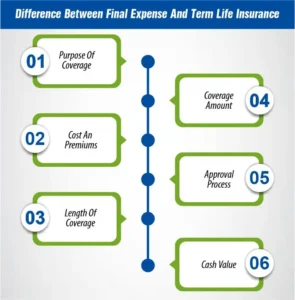
Difference Between Final Expense And Term Life Insurance
Let’s have a look at the major differences that are explained so you can understand better the difference between term life insurance and final expense insurance
Purpose Of Coverage
Final expense insurance is meant for small, guaranteed needs like funeral expenses.
While the term life is designed for the large financial protection such as mortgage payments, replacing income loss, childcare, and education acceptances and family lifestyle maintenance
Cost And Premiums
Final expense premiums remain level but these are more expensive per dollar of coverage because insurance companies take on more risk by not requiring medical exams
While term life premiums are lower because young and healthy people usually buy these plans and the insurance companies gather detailed health information before the application.
Length Of Coverage
Final expense insurance is permanent and it stays active for your entire life.
While the term life insurance is temporary. When the term years end the coverage will automatically end unless you renewed the policy or you can convert it to permanent insurance.
Coverage Amount
Final expense policies offer small payouts, usually enough to convert a funeral and minor debts
The term life policies offer the large coverage amount intended to replace the income or pay of the large obligations
Approval Process
Final expense policies have lenient underwriting, these are often with no medical exam.
While talking about the term life insurance, it typically requires the medical exam, detailed health questions and review of medical records
How Much Does Life Isurance Cost?
Cash Value
Final expense build a small cash value that goes slowly over time while the term life insurance built no cash value as it is the temporary policy
Is Final Expense Insurance Term Life?
There are so many people with you that final expense insurance is a type of term life shows but it is not true. Final expense in insurance is exactly a whole life insurance policy that means at last for your entire life, it builds cash value. It also gives you the benefit of Premiums that your premiums never change. It also provides guaranteed benefits.
Term life is temporary coverage that ends after a second number of years so remember that final expense insurance is not life. It is a form of permanent life insurance.
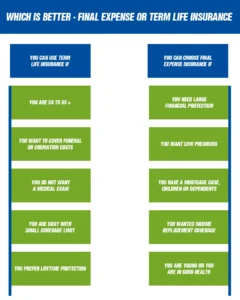
Which is Better – Final Expense Or Term Life Insurance
The policies diet choice always depends on your stage of life, your health, your budget and financial responsibilities. You can choose whatever is best for you and your family.
You can choose final expense insurance if
- you are 50 to 85+
- You want to cover funeral or cremation costs
- You do not want a medical exam
- You are okay with small coverage limit
- You prefer lifetime protection
You can use term life insurance if
- You need large financial protection
- You want low premiums
- You have a mortgage case, children or dependents
- You wanted income replacement coverage
- You are young or you are in good health
Final Expense vs Term Life – Affordability Comparison
Talking about the affordability of term life insurance and final expense insurance, it always depends on age and health. For the younger people, term life is typically much cheaper so it’s a good option.
For seniors or the individual with medical issues, final expense can be more accessible, even if price higher per dollar of coverage
Who Should Buy Both?
Some people can benefit from both types of plans for income replacement or mortgage protection and the final expense for lifetime funeral coverage. When life expires at age 65 to 70 final expense remains active and making sure that end of expenses are always covered.
Final Thoughts
Choosing between the final expense insurance vs term life insurance depends on your financial goals, age, health and the type of protection family needs. If you want lifetime coverage with benefits and approval then the final expense insurance is best. If you need a large affordable coverage for a temporary period within the term life is a better choice.
You always have to make sure that you understand the difference between final expense and life insurance that will help you to make sure that you pick the plan that gives your family the financial protection they deserve.
Let’s compare the term life and Final expense insurance today and also get the free quotes from M-life Insurance according to your budget and needs. Lets get free help today!

Joyce Espinoza, Expert Life Insurance Agent
Joyce Espinoza is a trusted life insurance agent at mLifeInsurance.com. She’s been in the insurance industry for over ten years, helping people, especially those with special health conditions to find the right coverage. At MLife Insurance, Joyce writes easy-to-understand articles that help readers make smart choices about life insurance. Previously, she worked directly with clients at Mlife Insurance, advising nearly 3,000 of them on life insurance options.