

Understanding the 7 types of health insurance plans is essential for making informed healthcare decisions. With rising medical costs and complex coverage options, choosing the right plan can directly impact both your health and financial stability. Each insurance plan type offers different benefits, provider access, and cost structures, which makes careful comparison critical.
Health insurance in the United States is not one-size-fits-all. Employer coverage, government programs, and private insurance options all fall into different categories. Knowing how these plans work helps individuals and families select coverage that aligns with their medical needs, lifestyle, and budget.
What Are Health Insurance Plans?
Health insurance plans are contracts between individuals and insurers that help cover medical expenses such as doctor visits, hospital stays, prescriptions, and preventive care. While coverage varies, all plans aim to reduce out-of-pocket costs and provide access to healthcare services.
There are several types of health insurance plans available in the U.S., each structured around provider networks, cost sharing, and referral requirements. Understanding these distinctions is key before enrolling in any policy.
Why Understanding Different Health Insurance Types Matters
Choosing the wrong coverage can lead to higher expenses, limited provider access, or denied claims. By learning the different types of health insurance plans in the US, consumers can avoid unexpected costs and receive appropriate care.
The 7 types of health insurance plans exist to serve different populations, including employees, families, seniors, and individuals with specific medical needs.
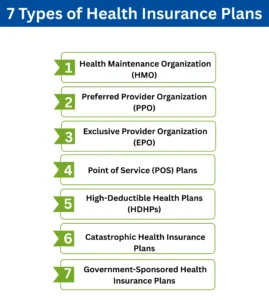
1. Health Maintenance Organization (HMO)
HMO plans require members to choose a primary care physician who manages all healthcare services. Referrals are necessary to see specialists, and care is limited to in-network providers.
These plans typically offer lower premiums and predictable costs, making them a popular option among employer-sponsored coverage. However, flexibility is limited compared to other plan types.
2. Preferred Provider Organization (PPO)
PPO plans offer greater freedom when selecting healthcare providers. Members can see specialists without referrals and access both in-network and out-of-network providers.
Among the 7 types of health insurance plans, PPOs are one of the most common choices for individuals seeking flexibility, though they usually come with higher premiums and deductibles.
3. Exclusive Provider Organization (EPO)
EPO plans combine elements of HMOs and PPOs. Members must stay within the network for coverage but do not need referrals for specialists.
This option suits individuals who want lower costs while maintaining some provider freedom. EPOs are often included in employer and private marketplace offerings.
4. Point of Service (POS) Plans
POS plans require a primary care physician but allow out-of-network care at higher costs. These plans offer moderate flexibility while maintaining structured care coordination.
Compared to other types of health insurance plans, POS coverage appeals to those who want a balance between cost control and provider choice.
5. High-Deductible Health Plans (HDHPs)
HDHPs feature lower monthly premiums and higher deductibles. They are often paired with Health Savings Accounts (HSAs), allowing individuals to save pre-tax dollars for medical expenses.
This plan type works well for healthy individuals who want lower premiums and long-term savings benefits.
6. Catastrophic Health Insurance Plans
Catastrophic plans provide coverage mainly for serious illnesses or emergencies. They have very low premiums but extremely high deductibles.
How Much Does Life Isurance Cost?
These plans are typically available to young adults or individuals who qualify for hardship exemptions. While limited, they still count among the 7 types of health insurance plans recognized under U.S. healthcare law.
7. Government-Sponsored Health Insurance Plans
Government programs serve specific populations and play a major role in national healthcare coverage.
These include:
- Medicare for seniors and disabled individuals
- Medicaid for low-income families and individuals
These programs ensure access to essential care and remain among the most relied-upon types of health insurance plans in the USA.
Employer vs Private Health Insurance Plans
Employer-sponsored coverage remains the most common type of health insurance in the U.S. These plans often include HMOs, PPOs, or EPOs and benefit from employer cost-sharing.
Private insurance plans, purchased through marketplaces or directly from insurers, offer flexibility for freelancers, self-employed individuals, and those without employer benefits. Both options fall within the broader health insurance types of plans available nationwide.
How to Compare Health Insurance Plans Effectively
Comparing coverage options requires evaluating premiums, deductibles, provider networks, and prescription coverage. Understanding how each plan handles out-of-pocket costs helps identify the best value.
When reviewing the 7 types of health insurance plans, consider your medical history, expected healthcare usage, and preferred doctors before making a decision.
Which Health Insurance Plan Is Best for You?
There is no universal “best” option. The ideal plan depends on income level, health conditions, family size, and provider preferences. Some individuals prioritize affordability, while others value provider flexibility or low deductibles.
Careful comparison of the different type of health insurance plans ensures that coverage aligns with both medical and financial needs.
Conclusion
Understanding the 7 types of health insurance plans empowers individuals to make confident healthcare choices. Each plan serves a distinct purpose, offering varying levels of cost control, flexibility, and coverage depth. Whether choosing employer coverage, private insurance, or government-sponsored plans, informed decisions lead to better health outcomes and financial security.
Taking time to compare options ensures you select coverage that truly protects you and your family in the long term.Looking for the right health insurance plan. Visit M-Life Insurance to compare coverage options, get expert guidance, and choose a plan that fits your health and budget. Start your search today.

Joyce Espinoza, Expert Life Insurance Agent
Joyce Espinoza is a trusted life insurance agent at mLifeInsurance.com. She’s been in the insurance industry for over ten years, helping people, especially those with special health conditions to find the right coverage. At MLife Insurance, Joyce writes easy-to-understand articles that help readers make smart choices about life insurance. Previously, she worked directly with clients at Mlife Insurance, advising nearly 3,000 of them on life insurance options.