


An agent bought you a monthly premium, then you compare it to the term life insurance and it will look expensive so you either walk away or side without asking what that extra money are actually buying. Both reactions can cost you over paying for a policy that is not secure budget or skipping the permanent coverage that could have made sense with your family.
Whole life insurance is a big, the decades long commitment. Here is the direct answer on what it cost, what it will build and when it’s worth it before you talk to an agent.
What Is a Whole Life Insurance Policy?
A whole life insurance policy is a permanent life insurance contract that will cover you for your entire life as long as you are paying the premiums on time. The plan includes a cash value account that will grow over time. It is not like term life, which expires after the set time period, whole life insurance never runs out as long as you keep paying.
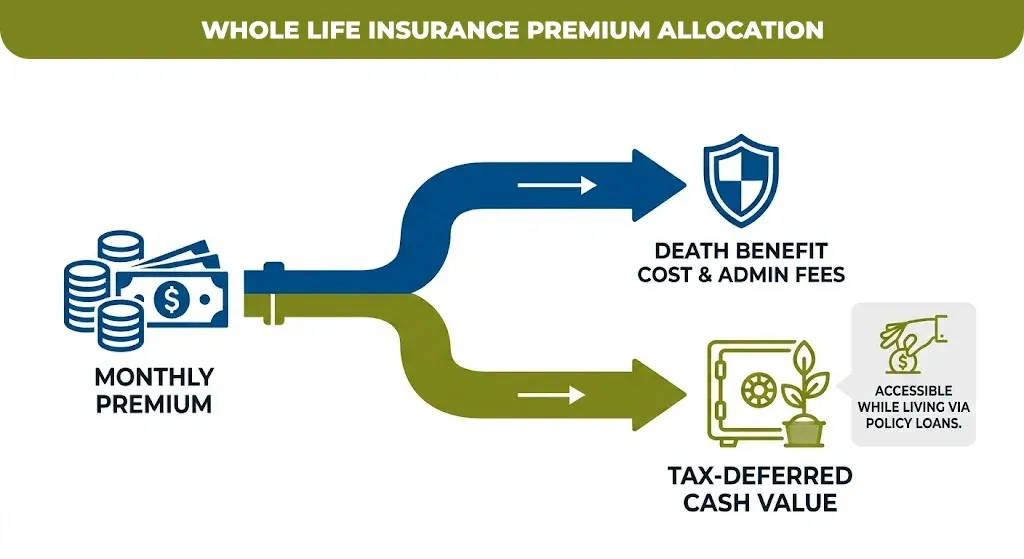
Every premium that you paid does two jobs, one part of it covers the cost of the Deck benefit, and a part of it builds cash value inside your policy. That cash value crew on the tax deferred this is in it can forward a case or withdrawn while you are still alive.
How Does a Whole Life Insurance Policy Work?
Your premium is fixed the day you buy the policy and it never increases, regardless of your age all your health changes later. The insurance company said that premium and it is based on your age, your health, gender and the coverage amount at the time of purchase.
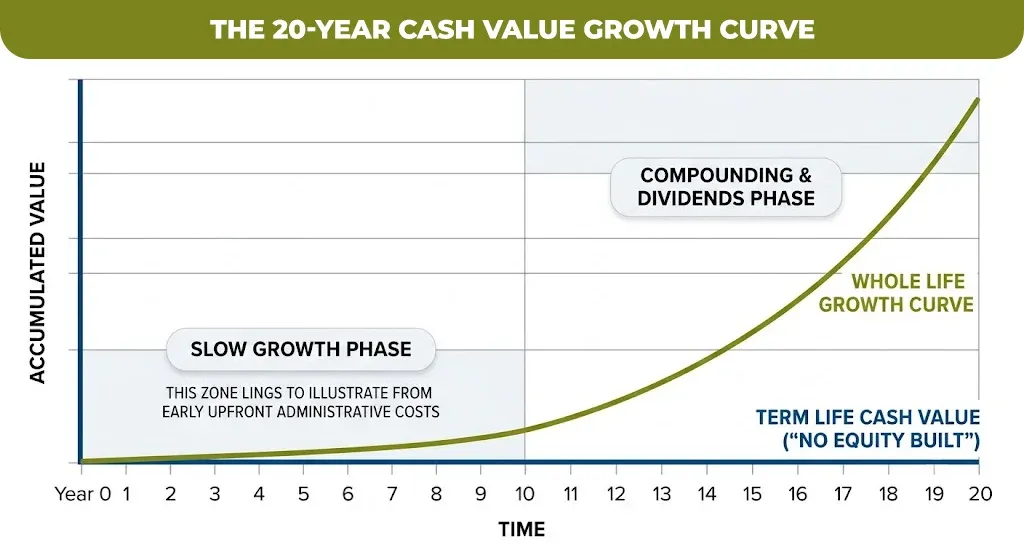
Early in the policy, most of your premium will cover the insurance companies administrative cost and the cost of insurance etc. so the cash when you grow slowly. Cruise speed up between the years 10 and 20 as those upfront cost level off and most of the people don’t see meaningful cash value until they have held the policy for at least a decade.
Some whole life policies are “participating,” meaning they may pay dividends from the insurer’s profits. These dividends aren’t guaranteed, but when paid, they can be used to buy additional coverage, reduce premiums, or added directly to cash value.
How Much Does a Whole Life Insurance Policy Cost?
Cost depends heavily on your age at purchase, the single biggest factor in your rate. A healthy 40-year-old typically pays between $250 and $750 a month for $500,000 in coverage, depending on the insurer and health class.
Age at Purchase | Monthly Premium (Female) | Monthly Premium (Male) |
30 | $238-$300 | $270-$340 |
40 | $394-$540 | $451-$574 |
50 | $658-$900 | $1,000-$1,300 |
60 | $1,300-$1,800 | $1,800-$2,400 |
70 | $2,617+ | $3,200+ |
Whole Life Insurance Policy vs. Term Life: Which Costs Less?
Term life costs far less upfront because it only pays for the death benefit, there’s no cash value component to fund. For a healthy 30-year-old buying $500,000 in coverage, a 20-year term policy can run as little as $30 a month, compared to several hundred dollars a month for whole life at the same age and coverage amount.
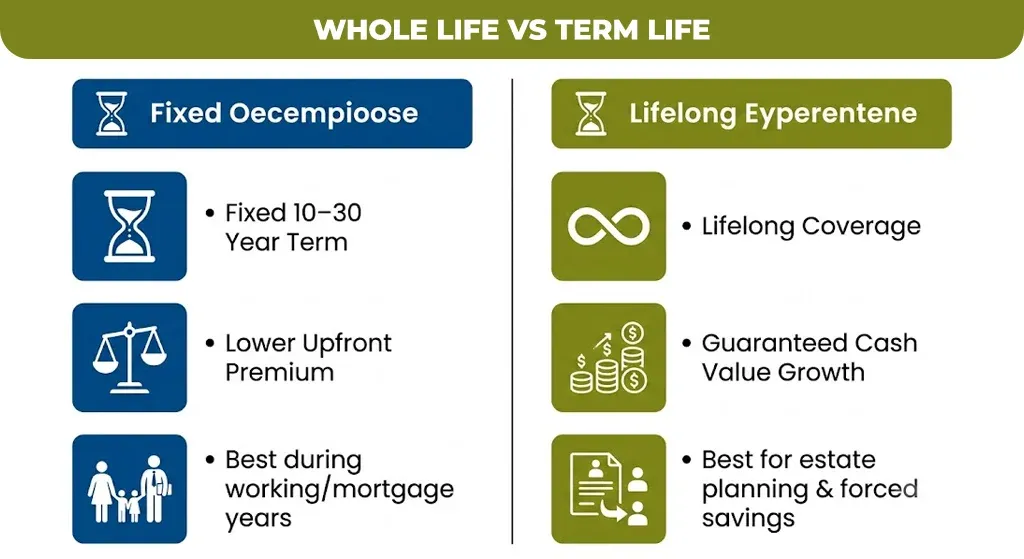
Feature | Whole Life | Term Life |
Coverage length | Lifetime | Fixed term (10-30 years) |
Premium | Fixed, higher | Fixed, lower |
Cash value | Yes, grows over time | None |
Best for | Estate planning, lifelong dependents, forced savings | Income replacement during working years |
Typical cost (age 30, $500K) | $200-$440/month | $25-$35/month |
Neither option is universally “better” — term life wins when the goal is simple, temporary income replacement for a fixed period, like the years your kids are financially dependent on you.
A Real-World Example: Choosing Between the Two
Consider a 35-year-old with two young kids and a mortgage. A 20-year term policy covers the years the mortgage is outstanding and the kids are dependents, at a fraction of the cost of whole life for the same death benefit.
If that same person also wants a permanent asset that builds cash value for retirement supplementation or estate planning, a smaller whole life policy layered on top — rather than replacing the term policy entirely and often balances affordability with the lifelong benefit. This “laddering” approach is common advice among fee-only financial planners for exactly this reason.
How Does Whole Life Insurance Cash Value Work?
Cash value is a savings component built into every whole life policy, and it’s accessible to you while you’re still alive. It’s separate from the death benefit and accessing it typically reduces the payout your beneficiaries receive unless the loan is repaid.
You can generally access cash value in three ways that taking a policy loan against it, withdrawing a portion directly, or surrendering the policy entirely for its cash value minus any surrender charges. Loans against cash value are usually not taxed as income, which is one reason the feature is popular in retirement and estate planning strategies.
Whole Life Insurance Policy Pros and Cons
Advantages:
- Premium never increases, regardless of age or new health conditions
- Builds tax-deferred cash value you can access while alive
- Coverage never expires as long as premiums are paid
- Some policies pay dividends that can offset future costs
Drawbacks:
- Premiums cost significantly more than term life for the same death benefit
- Cash value grows slowly in the first 10 years
- Surrendering early often means losing money to surrender charges
- More complex to understand than a straightforward term policy
Types of Whole Life Insurance Policies
Not all whole life policies work the same way, and the type you buy affects both cost and flexibility.
- Non-participating whole life
- Participating whole life
- Limited-pay whole life
- Guaranteed whole life / final expense
Most healthy applicants under 50 are better served by standard participating or non-participating whole life; guaranteed-issue and final expense products exist specifically for people who’d otherwise be declined coverage.
Whole Life Insurance Policy Rates: What Actually Moves Your Premium
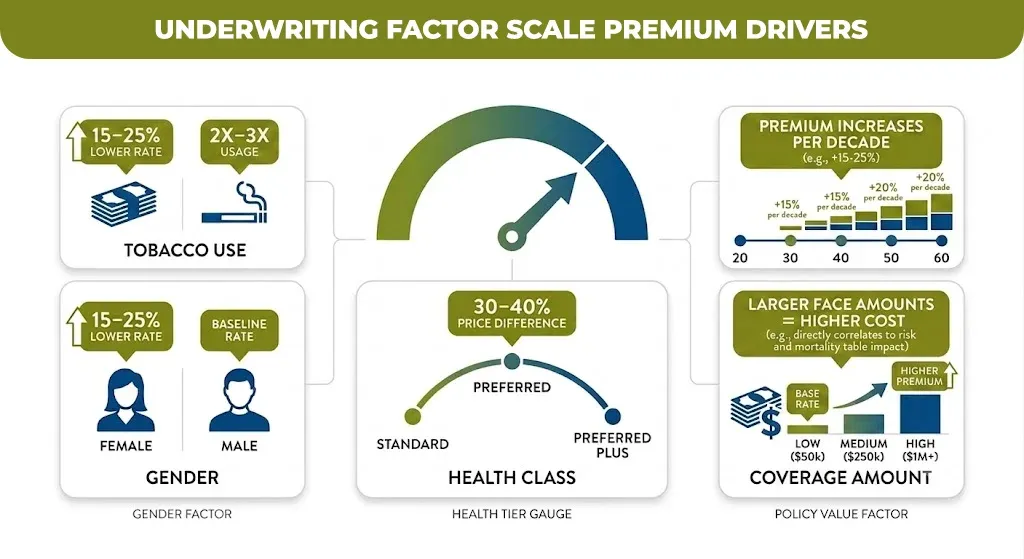
Beyond age, there are several underwriting factors that shift your quote up or down and understanding these will help you to negotiate a better health class before you commit to a rate.
- Health class: Insurers place applicants into tiers like Preferred Plus, Preferred, Standard, and below and it is based on medical exam results, and the gap between top and bottom tiers can be 30-40% on the same policy.
- Gender: Women generally have to pay 15-25% less than men at the same age, reflecting longer average life expectancy.
- Tobacco and nicotine use: Smokers pay roughly two to three times more than nonsmokers, and this will include vaping and non-cigarette nicotine products at many insurers.
- Coverage amount: Rates are not perfectly linear and doubling your coverage doesn’t always double your premium, since fixed administrative costs are spread across a larger policy.
Before You Buy: What to Check on Any Quote
- Guaranteed vs. illustrated growth: Ask which numbers in your quote are guaranteed and which are projected based on dividend performance that isn’t promised.
- Surrender charge schedule: Confirm how many years you’d lose money if you cancelled early.
- Insurer financial strength rating: A policy is only as reliable as the company backing it decades from now.
- Riders: Waiver of premium, accelerated death benefit, and paid-up additions riders can change the value of a policy significantly.
If you’re comparing whole life insurance policy quotes right now, it’s worth reviewing how term and permanent coverage differ for your specific life stage before locking in a rate — the right structure matters more than the lowest quoted premium.
Where to Go From Here
A whole life insurance policy is a long-term financial commitment, not a quick decision to make off a single quote. The right move is comparing real numbers for your age, health, and goals side by side before you sign anything.
Mlife Insurance helps people work through exactly this and compare whole life and term options against your actual budget and goals, without pushing you toward the most expensive policy on the shelf. If you’d like a second set of eyes on a quote you’ve already received, or want to see what coverage would look like for your situation, reach out to Mlife Insurance for a straightforward comparison.

Joyce Espinoza, Expert Life Insurance Agent
Joyce Espinoza is a trusted life insurance agent at mLifeInsurance.com. She’s been in the insurance industry for over ten years, helping people, especially those with special health conditions to find the right coverage. At MLife Insurance, Joyce writes easy-to-understand articles that help readers make smart choices about life insurance. Previously, she worked directly with clients at Mlife Insurance, advising nearly 3,000 of them on life insurance options.